






You've probably seen it scrolling past: a headline claiming a single bedroom houseplant can boost your deep sleep by 37%, backed by NASA. It's been copied onto what looks like hundreds of random websites lately, word for word, from florists to car dealerships to dog groomers. That alone should make you raise an eyebrow. So let's actually dig into where this claim comes from, what's real, and what's just gotten a little carried away on its trip around the internet.
What NASA actually studied
There is a real NASA study behind all this, just not the one getting quoted. Back in 1989, researcher Bill Wolverton ran what's now known as the NASA Clean Air Study at the Stennis Space Center, working with the Associated Landscape Contractors of America. The goal wasn't sleep at all, it was air quality for sealed environments like space stations. Wolverton and his team placed common houseplants in small, sealed chambers, pumped in volatile organic compounds like benzene, formaldehyde, and trichloroethylene, and measured how much each plant filtered out over 24 hours. Removal rates ranged widely, somewhere between 10 and 70 percent depending on the plant and the compound. Snake plant, in particular, stood out, pulling formaldehyde, benzene, trichloroethylene, and xylene out of the air in that sealed chamber.
That's a genuinely interesting, genuinely real study. It's just about air chemistry, not about tracking anyone's sleep stages.
So where does the 37% figure come from?
Honestly, it's hard to say. There's no peer-reviewed NASA paper measuring deep sleep phases before and after adding a bedroom plant, and no citation trail leading back to one. What we found instead was the same article, "how a single bedroom houseplant can increase deep sleep phases by 37%, according to a new NASA study," republished nearly verbatim across dozens of unrelated small business websites. That's a pretty reliable sign of syndicated or AI-generated content spreading for SEO purposes rather than an actual scientific finding.
It's also worth knowing that even the real 1989 study has its skeptics. Those results came from small, sealed chambers with no airflow, conditions nothing like an actual bedroom with doors, vents, and open windows. Researchers who've revisited the data since have pointed out that you'd likely need far more plants per square foot than anyone keeps in a real room to see a comparable effect on air quality at home.
What the science actually supports
None of this means plants and sleep have nothing to do with each other, it just means the connection is more modest and more indirect than a viral headline suggests.
A few things are genuinely true. Most plants take in carbon dioxide and release oxygen during the day, then reverse that process at night, similar to the way we breathe. But a handful of species, snake plant and aloe vera among them, use a different process called CAM photosynthesis, where they release oxygen and take in carbon dioxide overnight instead. That's the real botany behind the old idea of a "bedroom-friendly" plant.
There's also reasonable evidence that lower indoor VOC levels and better humidity support easier breathing overnight, and easier breathing tends to support better sleep, especially for people with allergies or mild respiratory sensitivity. And there's a broader, well-documented pattern in biophilia research: being around greenery is linked to lower stress and a calmer nervous system, both of which matter for how easily you fall and stay asleep. None of that adds up to a precise 37%, but it's a real, defensible reason to like the idea of a plant on your nightstand.
Picking the right plant for a bedroom
If you want to lean into what's actually true here, snake plant and aloe vera are the two most commonly recommended for a bedroom specifically, because of that nighttime oxygen release. Both are also famously low-maintenance, which matters in a room that usually gets less attention than your kitchen counter or living room shelf.
One honest caveat: if you share your home with a cat or dog, snake plant is mildly toxic to pets according to the ASPCA, generally causing drooling or vomiting if chewed rather than anything severe, but worth knowing before it goes on a nightstand your cat can reach. If pets are part of the picture, it's worth checking a full pet-safe plant list before deciding what goes in the bedroom.
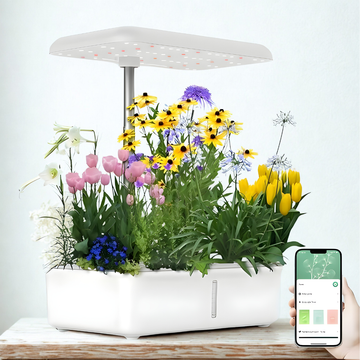
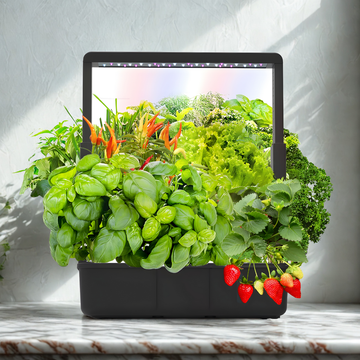
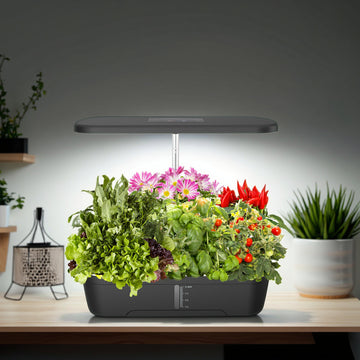
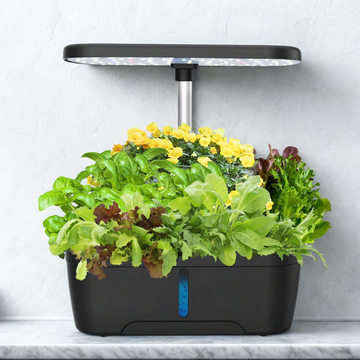
Whatever you choose, most bedrooms are also one of the dimmer rooms in the house, curtains drawn, smaller windows, furniture blocking what light does get in. A plant that's supposed to be quietly working in the corner overnight still needs enough light during the day to actually stay healthy. That's really the only place a grow light comes into this conversation honestly: not as a sleep hack, but as a way to keep a bedroom plant alive and functioning in a room that often doesn't get much natural light to begin with.
☀️ Explore Our Full-Spectrum LED Collection
The honest bottom line
The 37% number isn't a real NASA finding, and it's worth being skeptical of it, or any suspiciously specific statistic, showing up identically across dozens of unrelated websites. What is real is a modest, sensible case for keeping a plant in your bedroom: cleaner air on the margins, a little extra humidity, and the calming effect of having something green nearby. That's a smaller claim than the headline promised, but it's one that's actually true, which counts for more.
Have you kept a plant in your bedroom? If it's time to give one a proper spot to thrive, go take a look at the collection.


