







It's 2 a.m. You're staring at the ceiling. Your phone says you have to be up in five hours, and somehow that math makes everything worse. Sound familiar?
If you're reading this at a reasonable hour instead, lucky you, but the modern sleep crisis is real and it's widespread. We've tried the blackout curtains, the white noise machines, the melatonin gummies. And while you're cycling through gadgets and supplements, there's a quieter, greener solution that's been sitting in plain sight the whole time.
A plant. On your nightstand.
I know how that sounds. But stay with me, because the science here is genuinely interesting, and by the end you'll know exactly how to set up a bedroom that works with your biology instead of against it.
Let me be honest with you upfront about what plants can and can't do. A houseplant is not a sleeping pill, and anyone who promises you a precise percentage boost in deep sleep is making it up. What plants actually offer is more subtle and, I'd argue, more durable: a calmer, fresher, lower-stress environment that helps your body do what it already knows how to do. Let's get into why that works.
Why Plants Make Such a Good Sleep Hack: The Science
A breath of fresh air, even at night
Here's something most people get slightly wrong. Yes, plants release oxygen during the day through photosynthesis, but most of them switch to taking in oxygen and releasing CO2 at night, the same as we do.
A few plants are different. Snake plants and aloe vera use a special process called CAM photosynthesis (it stands for Crassulacean Acid Metabolism, but you can forget that immediately) that lets them release oxygen through the night instead. Now, I won't oversell this. A single plant won't dramatically change the oxygen level of your whole room. But these plants are also quietly working on your air in another way, gently filtering it and adding a touch of humidity, which can make a stuffy bedroom feel fresher. And a fresher-feeling room is a more restful one.
The calming power of scent
This is where the research gets genuinely strong. Certain plants release aromatic compounds, and some of those compounds have a measurable effect on your nervous system.
Lavender is the standout. Multiple studies have found that its scent can slow heart rate, lower blood pressure, and improve how rested people feel in the morning. It nudges your body toward the calm, parasympathetic state you need to drift off. Jasmine has shown similar calming effects in research settings, with people reporting lower anxiety and better sleep quality in jasmine-scented rooms.
These aren't miracle cures. But a soft, natural fragrance signaling "you're safe, you can relax now" is a real and pleasant nudge in the right direction, far gentler than anything in a pill bottle.
The biophilia effect
There's a word for our innate pull toward nature: biophilia. It's the idea that, having evolved surrounded by green and growing things, we're wired to find them calming.
And it holds up. Studies on this consistently find that being around plants and natural settings lowers stress hormones, reduces blood pressure, and lifts mood. Since a racing, stressed-out mind is one of the great enemies of sleep, anything that reliably dials down your baseline stress is working in your favor. Simply seeing a bit of greenery as you wind down tells your brain it's okay to let go of the day.
The Best Bedroom Plants for Better Sleep
Here are the sleep superstars worth a spot beside your bed.
Snake Plant. The low-maintenance champion. Releases oxygen at night, tolerates neglect, and survives in lower light than almost anything else. The easiest possible place to start.
Lavender. The classic sleep aid, thanks to that calming scent backed by real research. The catch: lavender genuinely craves bright light and will sulk in a dim room.
Aloe Vera. Another night-time oxygen producer, and a handy first-aid plant for minor burns. Like most succulents, it wants plenty of bright light to stay happy.
Jasmine. Famous for a sweet, calming fragrance linked to lower anxiety and better rest. It, too, is a sun-lover.
Peace Lily. A lovely air-purifying plant that tolerates lower light beautifully and adds a graceful touch of green. (One note if you have curious pets: peace lilies are toxic if chewed, so place accordingly.)
You may have spotted the pattern in that list. And it leads us straight to the one real obstacle.
The Big Problem: Bedrooms Aren't Greenhouses
Look back at those plants. The snake plant and peace lily will forgive a dim room. But the lavender, the aloe, the jasmine, the very plants with the most appealing sleep and scent benefits, all want bright light to thrive.
And bedrooms, by their nature, are some of the darkest rooms in the house. We put them on the cool, shaded side. We hang heavy curtains and blackout blinds precisely to keep light out. It's a genuine catch-22: the plants that could most improve your sleep are the ones least likely to survive in the room where you sleep.
Without enough light, lavender turns leggy and stops producing its fragrant oils. Aloe stretches and pales. Jasmine refuses to bloom. You end up with sad, struggling plants and none of the benefits you were hoping for.
So how do you grow a sun-loving sleep garden in a room built to block the sun?
The Solution: Grow Your Own Sleep Sanctuary
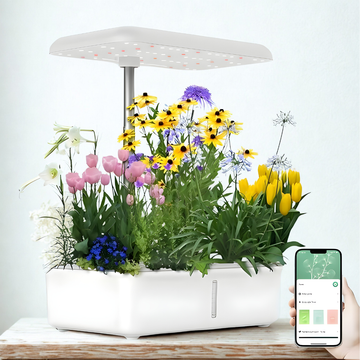
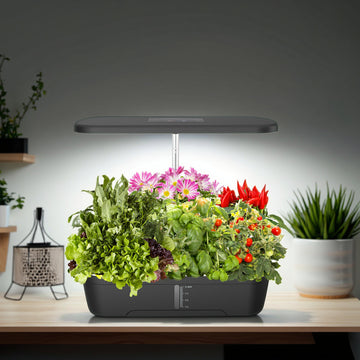
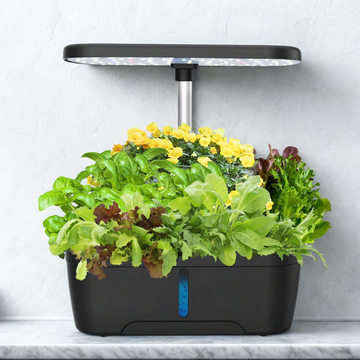
This is exactly the gap a good grow light is made to fill. Think of it less as a piece of plant equipment and more as the missing piece of your sleep setup, the thing that finally lets those fragrant, oxygen-rich, sun-loving plants flourish right where you need them.
A quality grow light delivers the specific spectrum of light plants use to grow, completely independent of your windows, your curtains, or which way your room faces. Suddenly that shaded north-facing bedroom can support a thriving little lavender plant. The light is what unlocks everything else.
Where to put it
The goal is for your setup to look intentional and beautiful, not like a science experiment took over your nightstand. A few ideas:
- A stylish pendant grow light above the nightstand that doubles as a soft reading lamp.
- A sleek desk-lamp-style fixture angled over a small cluster of plants on a dresser or shelf.
- A clip-on light tucked discreetly behind a row of pots on a windowsill that doesn't get quite enough sun on its own.
Picture it: a warm pool of light, a couple of healthy green plants, the faint scent of lavender as you settle in. That's the dream we're building.
A crucial pro-tip: let the dark in
Here's a mistake I want you to avoid. Turn your grow lights off at night. Plants need a genuine dark period to stay healthy, and you need darkness even more, because light exposure at night suppresses the melatonin that helps you sleep.
The simplest fix is a cheap outlet timer. Set the light to run during the day and shut off well before bedtime. Your plants get their light, you get your darkness, and nobody's circadian rhythm gets confused. This one habit is the difference between a setup that helps your sleep and one that quietly sabotages it.
Your Bedroom "Sleep Oasis" Starter Kit
Ready to build it? Here's the whole thing in four steps.
Step 1: Choose your plant. Starting out, pick one snake plant (forgiving and oxygen-giving) or one small lavender (for the scent) if you're ready to use a grow light. One plant is plenty to begin.
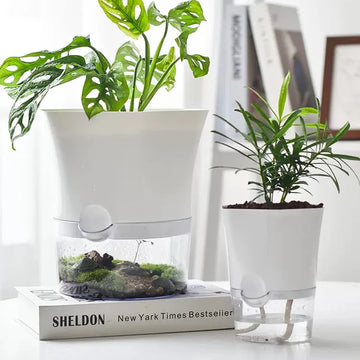
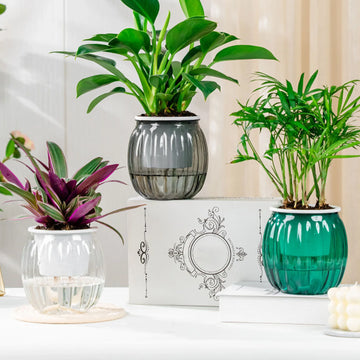
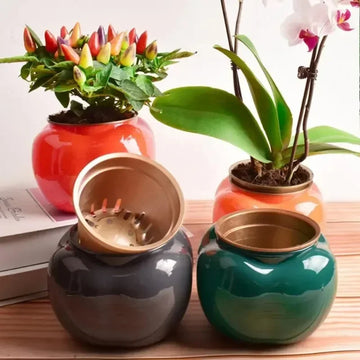
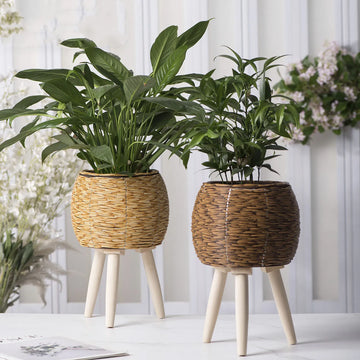
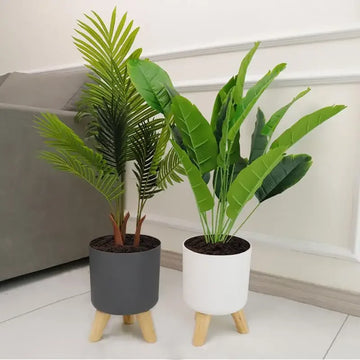
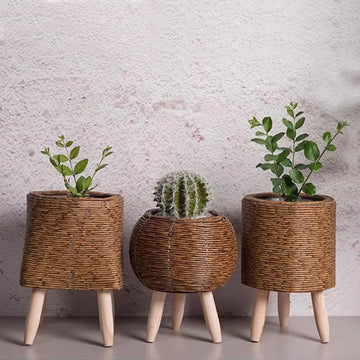
Step 2: Pot it beautifully. Choose a pot you actually love, something that fits your room. The aesthetics matter, because part of the benefit is simply enjoying the sight of it.
Step 3: Add your light. Position a grow light to give your plant the brightness it needs, and put it on a timer so it runs by day and switches off at night.
Step 4: Settle in. Let your little sanctuary do its quiet work, fresher air, a calming scent, a touch of green, and a lower-stress space to end your day.
That's it. No overhaul, no expensive renovation. Just one plant, one light, and a more restful room.
The Best Sleep Starts With One Plant and One Light
There's something elegant about this approach. The plants bring nature's slow, steady chemistry, the night-time oxygen, the calming scent, the biophilic ease. The grow light brings the modern technology that makes any of it possible in a real bedroom. Together they turn a dark, stuffy room into something that actively helps you rest.
You don't need to build a jungle overnight. Start with one plant you genuinely love. Give it the light it needs to thrive. And let your bedroom slowly become the calm, green sanctuary your sleep has been missing.
Sweet dreams are closer than you think.
Ready to start your sleep experiment? Explore our curated selection of quiet, bedroom-friendly grow lights designed to keep your sleep plant and your deep sleep, thriving 365 nights a year.
A quick, honest note: plants support a more restful environment, but they aren't a treatment for a sleep disorder. If you're dealing with persistent insomnia or sleep problems, it's worth talking to a doctor.


