






How much light does your plant need?
Lighting requirements for 122 indoor plants.
Select your plant and its size to see exactly how much light it needs to thrive.
How Much Light Does Your
Indoor Plant Really Need?
Most houseplants need 10–14 hours of light per day. The type matters just as much as the duration. Here's everything you need to know, from shade-tolerant corners to sun-hungry windowsills.
Low Light
North-facing rooms, interior spots, or several feet from any window. Readable without a lamp, never touched by direct sun.
10–11 hrs / day Snake Plant · ZZ Plant · Pothos · Peace Lily · Parlor Palm · Spider PlantModerate Indirect
East-facing windows or 3–6 ft from south/west glass. Bright and pleasant, but never in the direct path of intense sun.
11–12 hrs / day Calathea · Prayer Plant · Anthurium · Rubber Tree · Boston Fern · Moth OrchidBright Indirect
Beside a south or west window with a sheer curtain, or within 3 ft of an east window. Strong light, never direct baking sun.
12–13 hrs / day Monstera · Fiddle Leaf Fig · Bird of Paradise · Hoya · Alocasia · PileaBright Direct
Unobstructed south or west window, or a sunny outdoor patio. Direct sun hits the plant for several hours a day.
6–8 hrs direct sun Aloe · Cacti · Succulents · Herbs · Citrus · Yucca · String of Pearls| Plant | Light level | Daily hours | PPFD target | DLI target | Best window |
|---|---|---|---|---|---|
| Monstera Deliciosa | Bright indirect | 12 hrs | 250 μmol/m²/s | 10.8 mol/m²/d | East, filtered S/W |
| Snake Plant | Low | 10 hrs | 75 μmol/m²/s | 2.7 mol/m²/d | Any direction |
| Fiddle Leaf Fig | Bright indirect | 12–13 hrs | 250 μmol/m²/s | 10.8–11.7 mol/m²/d | East, filtered S |
| Pothos (Golden) | Low | 11 hrs | 75 μmol/m²/s | 3.0 mol/m²/d | Any except deep shade |
| ZZ Plant | Low | 10 hrs | 75 μmol/m²/s | 2.7 mol/m²/d | Extremely flexible |
| Peace Lily | Low | 11 hrs | 75 μmol/m²/s | 3.0 mol/m²/d | North or interior |
| Bird of Paradise | Bright indirect | 12–13 hrs | 250 μmol/m²/s | 10.8–11.7 mol/m²/d | S or W, filtered |
| Aloe Vera | Bright direct | 8 hrs | 400 μmol/m²/s | 11.5 mol/m²/d | S or W, unfiltered |
| Calathea | Moderate indirect | 12 hrs | 150 μmol/m²/s | 6.5 mol/m²/d | East or bright interior |
| Rubber Tree | Moderate indirect | 12 hrs | 150 μmol/m²/s | 6.5 mol/m²/d | East, or 3–4 ft from S |
Leggy, stretched growth
Long gaps between leaves as the plant reaches toward any available light source.
Faded or washed-out colour
Variegated or patterned leaves losing contrast — especially visible in Calathea and Maranta.
Stopped growing
No new leaves during the growing season, or leaves smaller than the plant's usual size.
Soil stays wet too long
Low light slows photosynthesis and water uptake, making root rot far more likely.
Lower leaves yellowing
The plant sacrifices older growth to redirect limited energy toward newer leaves near the light.
No flowers or fruit
Blooming and fruiting need the most energy — they're the first thing to stop when light is short.
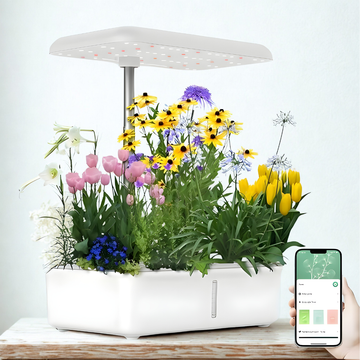
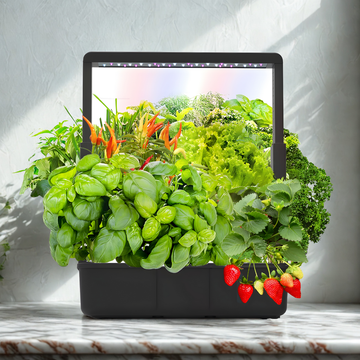
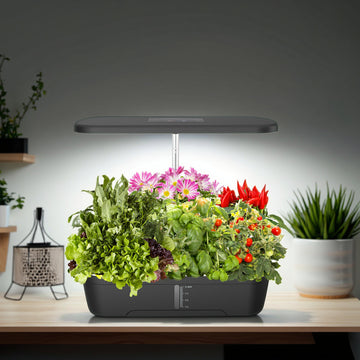
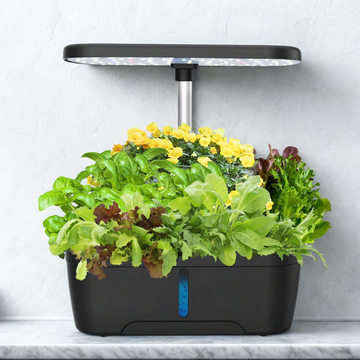
A full-spectrum LED grow light bridges the gap, delivering the right wavelengths at the right intensity, timed consistently regardless of season or room position. HydroPlant grow lights are designed to sit comfortably in a living space: the output is plant-optimised, not the harsh blueish glow of traditional horticultural lighting.
Shop Grow Lights