






Let me start with a fact that surprised me when I first learned it: your plants need 17 different nutrients to thrive. And here's the kicker, they don't get them all from the same place. Some come from the air and water (the stuff plants pull in for photosynthesis), and the rest come from what's happening down at the root level.
If you've killed a plant or two, I want you to let go of that guilt right now. You didn't fail because you don't have a "green thumb." You probably just got tangled up in the same conflicting advice that overwhelms every beginner. So let's cut through it.
Here's the whole secret, boiled down to one line: a good soilless mix + a gentle fertilizer + enough light = a happy plant. That's it. Master those three things and you're most of the way there.
Let's break it down so it actually makes sense.
Part 1: The Foundation, Soil (The "Why" Behind the Mix)
Why garden soil is a terrible choice for pots
Your instinct might be to grab a scoop of dirt from the backyard, or to buy a bag labeled "garden soil" or "topsoil." Please don't. This is one of the most common ways beginners accidentally doom a plant.
Outdoor garden soil is built for the outdoors. In the ground, it's part of a giant living system. Earthworms tunnel through it, rain drains away through layers of earth, and the whole thing breathes. Trap that same soil in a pot, though, and it does the opposite of what you want. It compacts into a dense, heavy brick that suffocates roots and holds water like a sponge that never gets wrung out.
And here's why that matters so much. Roots don't just need water, they need air. When soil stays soggy with no room for oxygen, the roots literally drown and begin to rot. This is root rot, the silent killer behind a huge number of dead houseplants. By the time the leaves are yellowing and mushy, the damage is often done underground.
So we don't use "soil" in the backyard sense at all. We use something better.
The magic of soilless mixes
Most quality potting mixes are actually soilless, meaning they contain little to no real dirt. Instead, they're a carefully balanced blend designed to do two jobs at once. Think of it as a dynamic duo:
The water-holders. These ingredients act like tiny sponges, soaking up moisture and holding it where roots can sip at it over time. The most common ones are peat moss and coco coir (a fluffy, sustainable fiber made from coconut husks).
The air-creators. These ingredients are all about structure. They prop the mix open, leaving little pockets of air so roots can breathe and excess water can drain away. The stars here are perlite (those little white volcanic puffs that look like Styrofoam) and vermiculite.
A great potting mix is simply the right balance of these two forces: enough sponge to stay hydrated, enough structure to stay airy. Hold water, but never hold it hostage.
Let's get our hands dirty
Here's something nobody tells beginners, and it's the single most useful skill you can develop: learn to judge a potting mix by feel. Forget the label for a second and trust your hands.
Grab a handful of good, lightly moistened mix and squeeze it. Here's what you're feeling for:
- It should feel light, fluffy, and crumbly, a bit like a moist chocolate cake or a wrung-out sponge.
- When you open your hand, it should mostly fall apart, not stay packed in a tight, muddy ball.
- You should be able to see the texture: bits of bark, flecks of white perlite, fibrous strands. Variety is good.
Now picture the opposite, a mix that feels dense, sticky, and muddy, that clumps into a wet ball and oozes when you squeeze it. That's a mix headed straight for root rot. If it feels like mud, it'll drown your plant. If it feels like a damp, crumbly sponge, you're golden.
Once you've felt the difference a few times, you'll never forget it. This single instinct will save more plants than any rule I could give you.
The art of mixing
Now for my favorite part, and your secret weapon. The "perfect" potting mix isn't a specific bag you have to hunt down at the store. It's a recipe you can adjust. Once you understand that, you stop being a nervous shopper and start being an actual plant parent.
Here's a simple base recipe to memorize:
2 parts coco coir (or peat moss) + 1 part perlite
That's a solid, all-purpose foundation for a huge range of common houseplants. But the real magic is learning to tweak it based on what a particular plant wants. Different plants come from different homes in the wild, and your job is just to nudge the recipe in their direction.
For succulents and cacti, go grittier. These desert dwellers hate sitting in moisture. Add more perlite (and even some coarse sand) so water rushes straight through. A good target is roughly equal parts coir and perlite/sand, sometimes even more grit than coir. The goal: a mix that dries out fast.
For aroids (Monstera, Pothos, Philodendron), go chunkier. In the wild, many of these climb trees and dangle their roots in open air. They crave aeration. Toss in a handful or two of orchid bark to create big, chunky air pockets. The mix should look almost coarse and rugged. Your aroids will reward you with that lush, jungly growth everyone wants.
For moisture-lovers (Ferns, Calatheas), go spongier. These plants come from humid forest floors and pout the moment they dry out. Bump up the coco coir or peat moss to hold more water, and ease back slightly on the perlite. You want a mix that stays consistently damp (but still never muddy).
See what's happening here? Same base recipe, three different plants, three small adjustments. You're not buying a solution, you're building one. That's the difference between guessing and understanding.
Part 2: The Spark, Fertilizer (Not Food, but Vitamins)
Let's bust the biggest myth in plant care
Walk down any garden aisle and you'll see bottles labeled "plant food." I'd like to gently throw that phrase in the trash, because it causes more confusion than almost anything else.
Your plant does not eat fertilizer. Plants make their own food.
Through photosynthesis, a plant takes light, water, and carbon dioxide from the air and uses them to manufacture sugars, its actual food. The plant is its own little kitchen. The engine that runs that kitchen is light. (Remember that. We'll come back to it.)
So what's fertilizer, then? Fertilizer is vitamins. Just like a person eats real meals for energy but takes a multivitamin to cover the trace nutrients their body needs to function properly, your plant makes its own food and draws on a handful of essential nutrients to build leaves, grow roots, and fight off stress. Fertilizer simply tops up those nutrients in the soil so the plant never runs short.
This one mindset shift, food comes from light, nutrients come from fertilizer, will make everything else click into place.
Decoding the N-P-K numbers
Flip a fertilizer bottle around and you'll see three numbers, like 10-10-10 or 5-3-3. These are the N-P-K values, and they tell you the ratio of the three major nutrients inside. Here's a little mantra to remember what each one does:
N-P-K: Up, Down, All Around.
N, Nitrogen, "Up." Nitrogen fuels all the lush, green growth above the soil: leaves, stems, that vibrant color. If you've got a leafy foliage plant and you want more of those gorgeous leaves, nitrogen is your friend.
P, Phosphorus, "Down." Phosphorus works below and at the business end of the plant: strong roots and, for flowering plants, blooms. Think of it as the nutrient for the foundation and the flowers.
K, Potassium, "All Around." Potassium is the all-rounder. It supports the plant's overall health, helping it manage water, resist disease, and shrug off stress. Think of it as the immune system.
For most leafy houseplants, a balanced fertilizer (where the three numbers are equal or close, like 10-10-10) is perfectly great. You don't need a shelf full of specialty bottles to start. One gentle, balanced fertilizer covers the vast majority of beginners' needs.
Choosing your fertilizer
You'll mainly run into two types, and here's the honest rundown:
Liquid fertilizers. You dilute these in water and apply them as you water. The big advantage: control. You decide exactly when to feed and how strong to make it, and you can stop instantly if something looks off.
Slow-release fertilizers. These come as little pellets you mix into the soil, and they release nutrients gradually over weeks or months. Convenient, yes, but you give up control. If you over-apply or the plant slows down for the season, you can't easily take it back.
For a beginner, I always recommend starting with a liquid fertilizer. When you're still learning to read your plants, the ability to adjust on the fly is worth its weight in gold.
Part 3: The Feeding Routine
The golden rule
Here it is, the one rule to tattoo on your brain: only feed a plant when it's actively growing.
For most houseplants, that's spring and summer, the bright, warm months when they're pushing out new leaves. In fall and winter, growth naturally slows or stops, and the plant simply doesn't need the extra nutrients. Feeding a dormant plant is like setting a full dinner plate in front of someone who's fast asleep. It just sits there and makes a mess (more on that mess in Part 4).
A simple schedule
Let's make this dead simple. For most foliage houseplants during the growing season:
Feed every 2 to 4 weeks with a balanced liquid fertilizer, diluted to half the strength on the label. Then stop completely through fall and winter.
There's an old gardener's phrase I love: "weakly, weekly." It means feed lightly and often rather than dumping a big dose all at once. Whether you go weekly at a very weak dilution or every few weeks at half strength, the spirit is the same.
And please hear me on this: when it comes to fertilizer, less is more. Far more plants are harmed by over-feeding than under-feeding. A slightly hungry plant perks right up with a feeding. An over-fed plant can suffer real damage. When in doubt, use less.
Light's crucial role
Remember how I said light is the engine? Here's where it pays off.
Fertilizer only helps a plant that's actually growing, and growth is powered by light. So feeding a plant that's sitting in a dark corner is like pouring gasoline into a parked car. The fuel has nowhere to go. It just pools, builds up, and eventually causes problems.
Before you reach for fertilizer, ask: is this plant getting enough light to actually use it? If a plant looks sluggish in a dim spot, the answer is almost never "more fertilizer." It's "more light." Fix the light first, and often the plant sorts itself out.
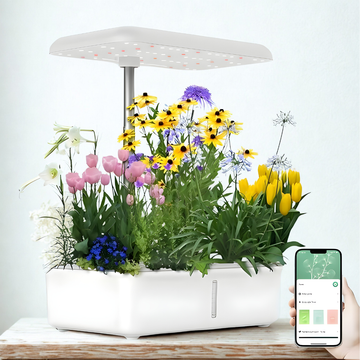
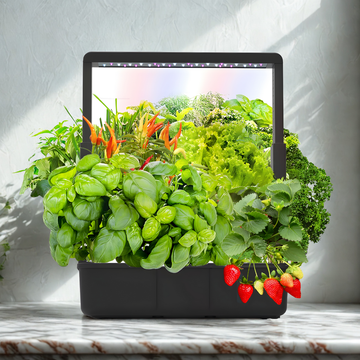
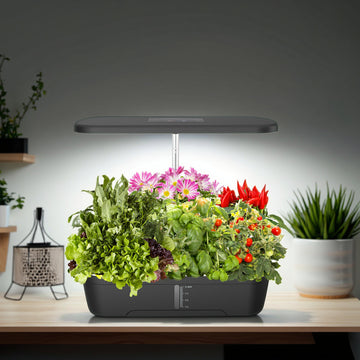
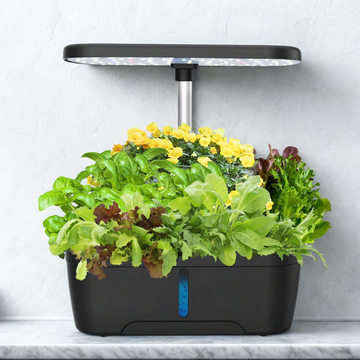
If your home is short on bright windows (and so many of ours are), this is exactly where a grow light earns its keep. A good grow light gives your plant the steady, usable energy it needs to actually grow, so the nutrients you provide have somewhere to go. Think of it as switching the engine on.
Part 4: Reading the Signs, Troubleshooting
Your plant is constantly telling you how it's doing, you just need to learn its language. Here are the most common nutrient-related signals and exactly what to do about them.
Salt crust and brown tips (over-fertilizing)
This is the big one, and it almost always comes from feeding too much or too often. Fertilizers are essentially mineral salts, and when there's more than the plant can use, those salts build up in the soil.
What it looks like:
- A white or yellowish crust forming on the soil surface or around the rim of the pot.
- Crispy, brown, burnt-looking leaf tips and edges, often while the rest of the leaf still looks healthy.
- In bad cases, wilting even when the soil is moist, because the salt buildup actually makes it harder for roots to take up water.
The fix, flushing. This sounds technical, but it's just giving the soil a thorough rinse. Take the plant to a sink, tub, or outside, and run room-temperature water slowly through the soil for several minutes, aim for about double the volume of the pot to pass through. Let it drain completely each time. You're literally washing the excess salts out the drainage holes. Let the plant drain fully so it's not left sitting in water, then hold off on fertilizing for a good while as it recovers. And going forward, dilute more and feed less.
Deficiency symptoms (under-feeding)
Much rarer than over-feeding, but worth recognizing. Reach back for "Up, Down, All Around" and the signs start to make sense:
Nitrogen ("Up") deficiency. Watch the older, lower leaves. If they're turning pale or uniformly yellow while the plant looks generally tired and growth has stalled, that's a classic nitrogen shortage. Nitrogen is mobile, so a hungry plant pulls it from old leaves to feed new ones, which is why the bottom goes first.
Phosphorus ("Down") deficiency. Look for dark, dull leaves, sometimes with a purplish or reddish tint to the stems or undersides, along with weak, stunted growth and poor blooming. The "down" nutrient struggling shows up in stems and overall vigor.
Potassium ("All Around") deficiency. This often shows as yellowing or browning along the edges of leaves while the center stays green, sometimes with a scorched look. Since potassium is the all-rounder, the plant looks generally stressed and weak.
In most cases, a deficiency just means it's time to start a gentle, regular feeding routine during the growing season, and to double-check that the plant has enough light to grow in the first place.
Conclusion: You've Got This
Take a breath, because you now understand more about plant care than most people ever bother to learn. Let's recap the three pillars:
Soil isn't dirt, it's a fluffy, crumbly, soilless mix that holds water and lets roots breathe. And it's a recipe you can adjust: grittier for succulents, chunkier for aroids, spongier for moisture-lovers.
Fertilizer isn't food, it's vitamins. Plants make their own food from light, and fertilizer just tops up the nutrients. Remember "Up, Down, All Around," and remember that less is always more.
The routine is simple: feed lightly during spring and summer, stop in winter, and never forget that light is the engine that makes any of it worthwhile.
None of this requires a special gift or years of experience. It just requires understanding why things work the way they do, and now you do. So trust your hands, read the signs your plants give you, and adjust as you go. Your plants aren't trying to outsmart you. They're just waiting for you to understand them.
Now go repot something. You can absolutely do this.
Ready to give your plants the light they deserve? Browse our collection of grow lights and find the perfect match for your green friends today.


