






You know the moment. You bring home a gorgeous fiddle leaf fig, set it in that empty corner you've been eyeing for months, snap a photo for the group chat, and for about three weeks, life is good. Then the leaves start dropping. One a day, then two. The stem that looked so proud now looks like it's apologizing for something. You water it more. You water it less. You move it to the window, then away from the window. Nothing works, and eventually you're standing over a crispy, half-bare plant wondering what you did wrong.
Here's the thing I've told hundreds of clients over twenty years of doing this: you didn't do anything wrong, exactly. You just did what your home was designed for, not what the plant was designed for. Your living room is a sanctuary for you: warm, dry, dim in the corners, climate-controlled to 70 degrees year-round. For a plant that evolved on a rainforest floor or a sun-baked hillside, that same room can be a desert or a dungeon, depending on where you put it.
Most plant deaths aren't a love problem. They're a translation problem. You're speaking one language, your plant speaks another, and nobody handed you the dictionary. So let's fix that.
The lighting problem nobody explains properly
"Bright indirect light" might be the most misunderstood phrase in the plant world. Every plant tag says it, every care blog repeats it, and almost nobody tells you what it actually looks like in a real house.
Here's what it doesn't mean: a spot across the room from a window, or a windowsill with sheer curtains you never open. Bright indirect light means the kind of brightness you'd get standing just inside an open window on a sunny day, not sitting in direct sun, but close enough to feel its presence. Most living rooms, even ones that feel plenty bright to your eyes, don't come close. Your eyes adjust to low light automatically, so a corner that looks perfectly sunny to you might be getting a fraction of what a Monstera or fiddle leaf fig actually needs.
When a plant doesn't get enough light, it doesn't just sulk quietly. It reaches. You'll see long, stretched-out stems with pale, spaced-out leaves trying to find something to grow toward, a process called etiolation. It's the plant equivalent of squinting and leaning forward. On the flip side, plunk a shade-loving plant into a south-facing window with unfiltered afternoon sun, and you'll get the opposite problem: scorched, bleached patches that look almost sunburned, because that's essentially what happened.
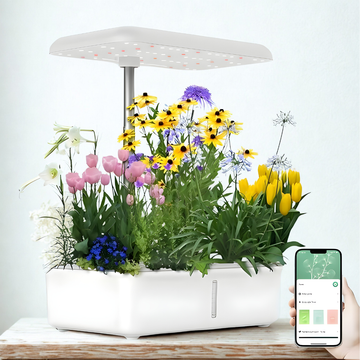
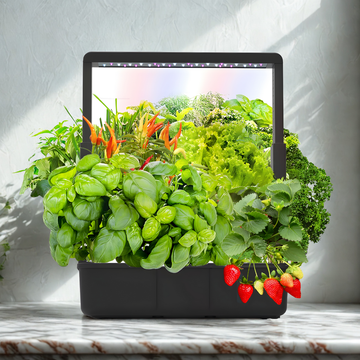
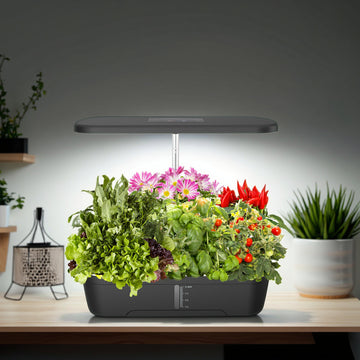
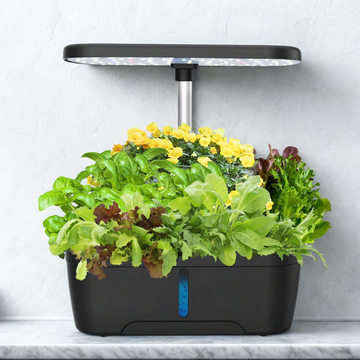
This is where I usually tell clients to be honest with themselves about their space before falling for a plant on Instagram. A designer plant in the wrong light isn't a design win, it's a slow-motion loss. If your space just doesn't get enough natural light no matter where you shuffle things, a grow light closes that gap instead of asking the plant to make do.
Overwatering: the number one killer, by a mile
If I had to bet on why any given houseplant died, I'd bet on this one first. Not neglect, not underwatering. Too much love, delivered as too much water, too often.
Here's the science in plain terms: roots need oxygen. They breathe, just like the rest of the plant, pulling oxygen from tiny air pockets in the soil. When you water on a fixed schedule instead of checking what the plant actually needs, that soil stays saturated, those air pockets fill with water instead of air, and the roots essentially suffocate. Once they're deprived of oxygen long enough, they start to break down and rot, which is exactly what it sounds like: root rot. Dark, mushy, foul-smelling roots that can no longer pull up water or nutrients, so ironically, a plant dying from too much water often looks like it's dying of thirst. Drooping leaves, yellowing, a general look of defeat. You water it more. The cycle continues.
Throw away the watering schedule. Seriously. Instead, do the finger test: stick your finger an inch or two into the soil. If it's still damp, wait. If it's dry, water thoroughly and let the excess drain away completely. This takes thirty seconds and tells you more than any calendar reminder ever will.
The invisible enemy: humidity
Here's a fact that surprises a lot of people: the majority of popular houseplants, your Monsteras, your pothos, your calatheas, your ferns, evolved in tropical rainforests where humidity regularly sits above 60 or 70 percent. Your home, especially once the heat or air conditioning kicks in, often hovers somewhere between 30 and 40 percent. That's not a small gap. That's the difference between a rainforest and a desert.
Low humidity shows up as brown, crispy tips and edges on leaves, sometimes a slight curling as the plant tries to reduce water loss through its leaves, a process called transpiration. It's not a disease and it's not your fault. It's just dry air doing what dry air does. The plant is essentially losing moisture faster than its roots can replace it, so it starts rationing.
The tropical temperature trap
Plants that grow in the tropics didn't evolve for temperature swings. They like it steady, and your home, full of drafty windows, doors that open to the cold, and HVAC vents blasting hot or cold air directly onto leaves, is anything but steady.
A plant sitting against a cold windowpane in January is getting chilled from one side while the rest of the room stays warm, which stresses it in ways that often show up weeks later as mysterious leaf drop. Same story near a heating vent or a fireplace: the blast of dry, hot air dehydrates leaves faster than the plant can compensate. Neither of these is dramatic in the moment. They're slow, cumulative stress, which is part of why they're so easy to misdiagnose.
The container conundrum
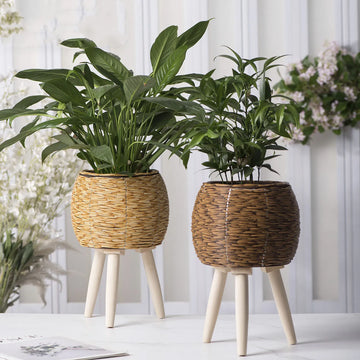
This one's simple but it trips up more people than you'd think. That gorgeous ceramic pot without a drainage hole? It's beautiful, and it's also a death trap. Without somewhere for excess water to go, you're back to soggy roots and root rot, no matter how carefully you water.
And even with good drainage, potting mix doesn't last forever. Over time it compacts, loses its airy structure, and starts holding water in ways it wasn't designed to. A plant that's been happy in the same pot for two or three years might just need fresh mix and a bit more room to breathe, not a diagnosis.
How to actually fix this
Be a detective, not a scheduler. Watering days on a calendar feel organized, but plants don't read calendars. Check the soil, look at the leaves, and adjust based on what you actually observe, not what worked last Tuesday.
Group your plants together. Clustering plants raises the humidity right around them, since they're all releasing moisture through transpiration into the same small pocket of air. It's a built-in microclimate, and it looks great too.
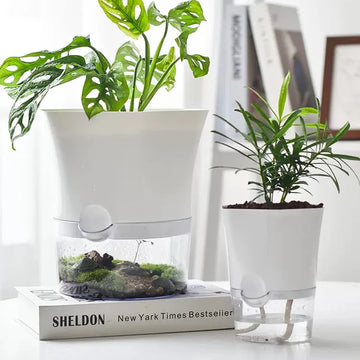
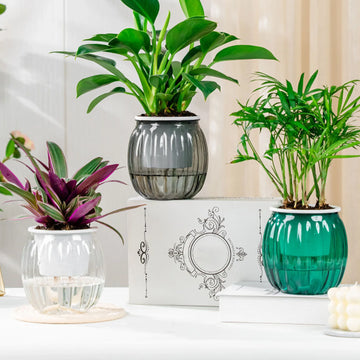
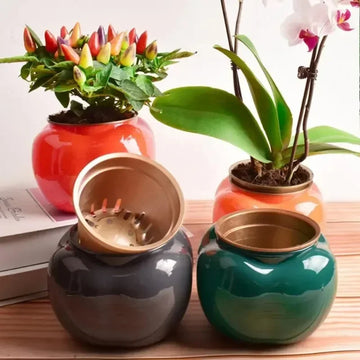
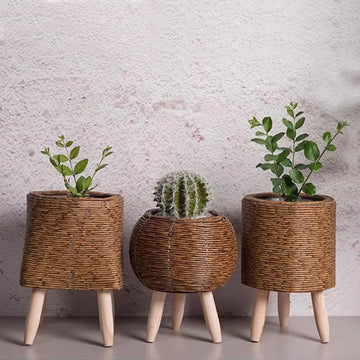
Use the double-pot method. Keep your plant in its plain nursery pot with drainage holes, then slide that whole pot inside your decorative one. You get the look you want, easy watering, and proper drainage, all at once. This is genuinely one of the easiest fixes in the whole list.
Match the plant to the space, not the other way around. If a corner is dim and there's no getting around it, a snake plant or a ZZ plant will be far happier there than anything with "bright light" on its tag. If natural light in your home is limited across the board, this is exactly where a good grow light earns its keep: it lets you put a plant where it looks best instead of forcing your whole layout around a single sunny window. We built Hydro Plant's lineup around this exact problem, giving plants the spectrum they actually need in the spots your home was never going to provide it naturally.
You haven't killed anything that can't be explained
Every single person who's ever kept plants, myself included after two decades of doing this professionally, has killed one they didn't mean to. It's part of the process, not a verdict on your abilities. The plants that struggle in our homes aren't struggling because we don't care enough. They're struggling because we're asking a rainforest native to thrive in conditions built for humans, not photosynthesis.
Once you start reading your space the way your plants do, checking soil instead of the calendar, grouping instead of isolating, matching plant to spot instead of hoping for the best, that indoor jungle you pictured when you bought your first plant starts to feel a lot more possible.
What's been your biggest houseplant struggle? If you want more of this kind of troubleshooting in your inbox, subscribe to the newsletter for ongoing plant care tips.
If low light is the culprit in your home, browse our grow lights.


