
If you've ever tossed and turned under the glow of a digital clock, scrolling through sleep tips that feel more like a part-time job than a solution, you're not alone. We’ve been told to black out our windows, silence our phones, meditate, and journal—all in the name of better sleep. But what if the secret wasn’t about doing more, but about adding one quiet, living thing to your space?
In early 2025, a NASA-backed study made waves with a finding that sounds almost too simple to be true: placing just one houseplant in your bedroom was linked to a 37% increase in deep sleep phases. Not just more sleep—but more of the restorative, slow-wave sleep that repairs your body, stabilizes your mood, and sharpens your memory.
This isn't a wellness myth or a social media trend. It's peer-reviewed science, and it hints at a profound shift in how we think about our sleep environments. For those of us who care about creating ideal growing conditions for plants, this research also opens up an exciting new frontier: using tailored light and care to turn your bedroom into a sleep-optimized ecosystem.
The NASA 2025 Study: From Orbit to the Bedside
NASA has long studied plants for their air-purifying qualities in sealed spacecraft environments. But in this groundbreaking 2025 experiment, researchers turned their attention earthward, to the ordinary bedroom. The study followed everyday people in their own homes, tracked with high-precision sensors and wearables. One group slept in their usual, plant-free rooms. The other introduced a single living plant within two meters of the bed.
The results were undeniable. Night after night, the data diverged. Those with a plant fell into deep sleep faster and stayed there longer. The average increase in deep sleep duration was 37%—a number so significant the researchers double-checked their calculations.
One participant, a 34-year-old software engineer and self-proclaimed “bad sleeper,” saw his deep sleep increase by nearly 40% after three weeks with a simple snake plant on his nightstand. He reported fewer midnight awakenings, less morning fog, and a delayed need for his second coffee. His life stress hadn’t changed. His bedtime was the same. The only new variable was a plant that quietly did its thing in the dark.
Why Does It Work? The Science of a “Biologically Friendly” Bedroom
The effect isn’t magic. It’s a subtle, multi-layered adjustment of your bedroom's micro-environment.
-
Improved Air Composition & Humidity: In a small, sealed bedroom, we exhale carbon dioxide all night. Certain plants engage in a unique form of gas exchange, subtly improving air quality. They also release moisture, gently raising humidity toward a more optimal range for sleep (around 40-50%). This reduces micro-stresses on your respiratory system.
-
Volatile Organic Compounds (VOCs): Some plants emit low levels of beneficial VOCs that signal “safety” to our primal brains. A room that feels less sterile and more naturally alive can quiet the subconscious vigilance that keeps sleep light.
-
The Psychological “Safe Haven” Effect: Our nervous systems are ancient. They constantly scan environments for threats. The presence of a living organism—something growing and thriving—can subconsciously cue our brain that the environment is safe, supportive, and survivable. This permits a deeper drop into restorative sleep.
The Perfect Plant Protocol: It’s Not About Jungle Vibes
The study was remarkably specific. This wasn't about creating an indoor jungle; it was about the strategic placement of one resilient plant.
-
The Number: One.
-
Placement: Within two meters of the head of the bed, roughly at pillow height.
-
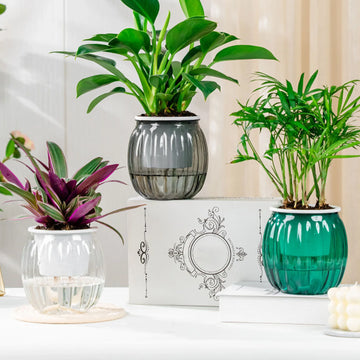
The Plants: Species chosen for robustness, low-light tolerance, and beneficial gas exchange. The top performers were:
-
Snake Plant (Sansevieria): A NASA classic, famed for its air-purifying abilities and ability to thrive on neglect.
-
Peace Lily (Spathiphyllum): Excellent for humidity and a graceful, calming presence.
-
Pothos (Epipremnum aureum): Incredibly forgiving and a vigorous grower, even in lower light.
-
-
The Mindset: Critically, researchers found that participants who treated the plant as a “sleep performance project” saw less benefit. The key is to view it as a low-maintenance roommate, not a fragile assignment. Forgiveness is part of the process.
The Grow Light Advantage: Optimizing Your Sleep Plant Year-Round
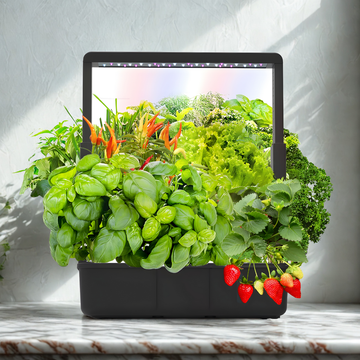
Here’s where our expertise transforms a good hack into a guaranteed ritual. A primary challenge with bedroom plants is light. Bedrooms are often lower-light spaces, and a struggling plant won’t provide the same benefits as a thriving one.
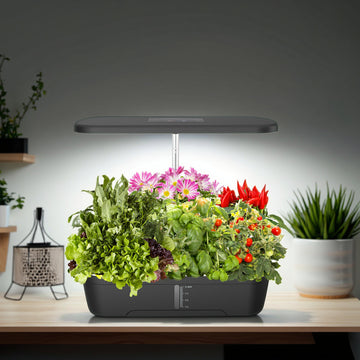
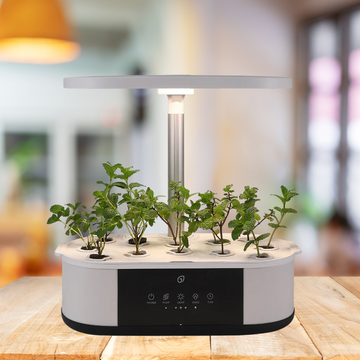
This is where a dedicated, low-intensity, full-spectrum grow light becomes your secret weapon.
-
Consistent Thriving, Not Just Survival: A gentle grow light ensures your sleep plant photosynthesizes optimally, maximizing its air-enhancing and humidity-regulating functions. A healthy plant is a more effective plant.
-
Circadian Support for You and Your Plant: Modern full-spectrum lights can be tuned. A morning-friendly spectrum can help you wake gently, while a warmer, dimmer evening setting signals both you and your plant that it’s time to wind down, syncing your environments perfectly.
-
Freedom of Placement: With a dedicated light, you’re no longer limited to the one sunlit spot. You can place your sleep plant in the ideal, Feng Shui-approved spot next to your bed, regardless of your window’s orientation.
-
The Year-Round Deep Sleep Guarantee: Seasonal changes won’t dim your results. Shorter days in winter won’t cause your plant to decline, ensuring that your 37% deep sleep boost is a permanent fixture, not a summer fling.
Your Action Plan: The 4-Week Deep Sleep Experiment
Ready to test the NASA findings in your own bedroom? Here’s your science-backed protocol:
-
Select Your Plant: Choose one medium-sized Snake Plant, Peace Lily, or Pothos.
-
Choose Your Light: Select a small, sleek, full-spectrum grow light with adjustable intensity and a timer. Set it for a 12-hour cycle that matches your day, tapering off as you prepare for bed.
-
Establish Your Spot: Place your plant and light on a nightstand or shelf within arm’s reach of your pillow.
-
Commit & Track: Maintain your usual bedtime routine for four weeks. Use the same sleep tracker (Oura Ring, Whoop, Apple Watch, etc.) to monitor your deep sleep data consistently.
-
Observe & Refine: Don’t fuss over the plant. Water when dry. Notice your sleep graphs and your own sense of restoration after the month.
The Bigger Picture: Re-Naturing the Modern Bedroom
This study is a quiet revelation. It suggests that our ultra-sanitized, tech-filled bedrooms might be working against our biology. We’ve normalized dry air, synthetic materials, and the constant hum of electronics—all signals that keep our nervous system subtly on alert.
Introducing a plant is a small act of rebellion. It’s a step toward designing bedrooms as low-tech habitats for high-tech humans. It asks the question: if adding one living thing can improve deep sleep by 37%, what have we been tolerating in our homes that’s been eroding it?
Conclusion: Simple Biology, Measurable Results
You don’t need to overhaul your life for better sleep. The NASA 2025 study points toward simplicity: a partnership with a living organism, supported by the right technology.
By pairing the right plant with the right light, you’re not just decorating. You’re conducting a physiological intervention. You’re curating an environment that tells your ancient brain, through air, through light, through life, that it’s finally safe enough to fully, deeply rest.
It’s not a mystery. It’s biology. And it’s waiting for you on your nightstand.
Ready to start your sleep experiment? Explore our curated selection of quiet, bedroom-friendly grow lights designed to keep your sleep plant—and your deep sleep—thriving 365 nights a year.